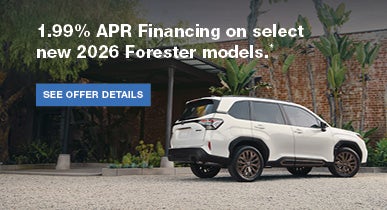

2026 Subaru Forester vs 2026 Hyundai Tucson
Quick Summary
The 2026 Subaru Forester and 2026 Hyundai Tucson are two standout compact SUVs offering strong practicality, modern technology, and impressive safety features. The Forester emphasizes standard all-wheel drive, rugged versatility, and excellent visibility, making it ideal for drivers who prioritize all-weather confidence and outdoor capability. The Tucson focuses on bold styling, advanced tech, and a wide range of powertrain options, including hybrid variants for improved efficiency. Both SUVs deliver excellent value, but their strengths cater to different lifestyles and driving preferences.
The comparison of 2026 Subaru Forester vs 2026 Hyundai Tucson is important for shoppers seeking a compact SUV that blends comfort, technology, and everyday usability with long-term reliability. Both models are highly competitive in the segment and continue to attract families and commuters looking for dependable transportation. For drivers interested in exploring Subaru models and available trims, the Empire Subaru vehicle research center provides helpful insights into features, specifications, and current inventory.
While both SUVs deliver modern appeal, they differ significantly in engineering approach, capability, and driving experience.
Exterior Design and Styling
Subaru Forester Design
The 2026 Subaru Forester maintains a functional and adventure-ready design language.
Key design features include:
- Upright SUV proportions for maximum visibility
- Large greenhouse windows
- Practical roof rail integration
- Rugged, utility-focused styling
The Forester’s design reflects its focus on practicality and outdoor versatility.
Hyundai Tucson Design
The Hyundai Tucson takes a bold and futuristic design approach.
Notable styling elements include:
- Angular body lines and geometric accents
- Distinctive LED lighting signature
- Wide, modern grille design
- Sleek aerodynamic silhouette
The Tucson stands out visually as one of the most modern-looking SUVs in its class.
Key Difference
- Forester: Functional, rugged, and visibility-focused
- Tucson: Bold, futuristic, and design-driven
Interior Comfort and Cabin Experience
Subaru Forester Interior
The Forester prioritizes space, visibility, and ease of use.
Interior highlights include:
- Excellent outward visibility
- Spacious seating layout
- Simple, intuitive controls
- Large cargo capacity for its class
The cabin feels open and practical, especially for long-distance driving.
Hyundai Tucson Interior
The Tucson delivers a more futuristic and tech-forward interior experience.
Interior highlights include:
- Wide dual-screen digital display layout (available)
- Premium material options
- Minimalist dashboard design
- Comfortable seating with modern ergonomics
Key Difference
The Forester focuses on practicality and visibility, while the Tucson emphasizes technology and modern design.
Performance and Driving Dynamics
Subaru Forester Performance
The Forester comes standard with Subaru’s Symmetrical All-Wheel Drive system.
Performance strengths include:
- Confident traction in all weather conditions
- Stable and predictable handling
- Comfortable ride quality for daily use
- Strong capability on rough or unpaved roads
It is engineered for consistency and all-weather confidence.
Hyundai Tucson Performance
The Tucson offers multiple engine options, including hybrid variants.
Performance strengths include:
- Smooth and refined acceleration
- Available hybrid efficiency
- Comfortable highway cruising
- Balanced ride tuning
Key Difference
The Forester prioritizes traction and capability, while the Tucson focuses on efficiency and powertrain variety.
Off-Road and All-Weather Capability
Subaru Forester Capability
The Forester is one of the most capable compact SUVs in its class for challenging conditions.
Key features include:
- Standard all-wheel drive across all trims
- X-MODE traction management system
- Generous ground clearance
- Hill descent control
Hyundai Tucson Capability
The Tucson offers light off-road ability depending on configuration.
Key features include:
- Available all-wheel drive
- Terrain drive modes
- Stable road handling
Key Difference
The Forester clearly leads in off-road and all-weather capability.
Technology and Connectivity
Subaru Forester Technology
The Forester provides straightforward and user-friendly technology.
Tech highlights include:
- Large infotainment touchscreen
- Wireless smartphone integration
- Driver-focused interface
- Available navigation features
Hyundai Tucson Technology
The Tucson offers one of the most advanced tech setups in the segment.
Tech highlights include:
- Dual-screen panoramic display (available)
- Digital instrument cluster
- Advanced voice control features
- Over-the-air update capability
Key Difference
The Tucson leads in advanced tech features, while the Forester prioritizes ease of use.
Safety and Driver Assistance
Subaru Forester Safety
Subaru’s EyeSight Driver Assist Technology remains a major strength.
Features include:
- Adaptive cruise control
- Lane centering assist
- Pre-collision braking
- Blind-spot monitoring
The Forester consistently earns top safety ratings.
Hyundai Tucson Safety
The Tucson also offers a strong suite of safety systems.
Features include:
- Forward collision avoidance assist
- Lane keeping assist
- Blind-spot collision warning
- Highway driving assist
Key Difference
Both SUVs are highly rated for safety, with slightly different system philosophies.
Fuel Economy and Efficiency
Subaru Forester Efficiency
The Forester offers balanced fuel economy despite standard AWD.
Benefits include:
- Consistent real-world efficiency
- No compromise AWD capability
- Reliable long-term ownership costs
Hyundai Tucson Efficiency
The Tucson often has the advantage in fuel economy, especially with hybrid models.
Benefits include:
- Excellent hybrid fuel efficiency
- Lower fuel consumption options
- Strong city driving economy
Key Difference
The Tucson generally wins in efficiency, while the Forester wins in capability.
Ownership Value and Long-Term Reliability
Subaru Forester Value
The Forester is known for strong resale value and long-term durability.
Hyundai Tucson Value
The Tucson offers strong warranty coverage and modern feature value.
Key Difference
- Forester: Long-term durability and resale strength
- Tucson: Feature-rich value and warranty protection
Which SUV Should You Choose?
Choose the Subaru Forester If You Want:
- Standard all-wheel drive
- Strong off-road capability
- Excellent visibility and practicality
- Long-term reliability focus
Choose the Hyundai Tucson If You Want:
- Modern tech and design
- Hybrid efficiency options
- Sleek interior experience
- More powertrain variety
Final Thoughts
The 2026 Subaru Forester vs 2026 Hyundai Tucson comparison highlights two very different approaches to the compact SUV segment. The Forester is built for drivers who prioritize safety, all-weather traction, and rugged practicality, making it a dependable companion for outdoor lifestyles and challenging climates. The Tucson, on the other hand, appeals to those who value cutting-edge technology, stylish design, and efficiency-focused performance. Both are excellent choices, but your decision ultimately comes down to whether you value capability or innovation more.
For more Subaru SUV details, trims, and availability, visit the Empire Subaru model selection page for the latest updates and information.
FAQS
Is the Subaru Forester better in snow than the Hyundai Tucson?
Yes, the Subaru Forester generally performs better in snowy and icy conditions because it comes standard with Subaru’s Symmetrical All-Wheel Drive system. This system continuously distributes power to all four wheels, improving traction and stability on slippery surfaces. The Forester also offers higher ground clearance and specialized traction management systems like X-MODE, which further enhance control in winter weather. While the Hyundai Tucson offers available all-wheel drive, it is not standard across all trims, making the Forester the more confident choice for drivers in harsh winter climates.
Which SUV has more advanced technology?
The Hyundai Tucson typically offers more advanced technology features compared to the Subaru Forester. Its available dual-screen panoramic display, digital instrument cluster, and advanced connectivity features give it a more futuristic cabin experience. It also supports over-the-air updates and enhanced voice controls in higher trims. The Subaru Forester focuses more on simplicity and ease of use, offering intuitive controls and a straightforward infotainment system. Drivers who prioritize cutting-edge tech will likely prefer the Tucson, while those who want straightforward usability may favor the Forester.
Which SUV is more fuel-efficient?
The Hyundai Tucson generally offers better fuel efficiency, especially when equipped with hybrid powertrains. Its hybrid models are designed to maximize mileage and reduce fuel consumption, making them ideal for commuters and city drivers. The Subaru Forester delivers competitive fuel economy considering it comes standard with all-wheel drive, but it does not offer hybrid options in the same way as the Tucson. Drivers focused primarily on fuel savings may find the Tucson more appealing, particularly in hybrid configurations.
Which SUV is better for long-term ownership?
Both SUVs are strong long-term choices, but they excel in different ways. The Subaru Forester is known for its durability, reliability, and strong resale value, making it a favorite among long-term owners who prioritize dependability. The Hyundai Tucson offers strong warranty coverage and modern features that provide peace of mind and value over time. Ultimately, the Forester may appeal more to those focused on longevity and rugged use, while the Tucson appeals to those who want advanced features and warranty protection.